
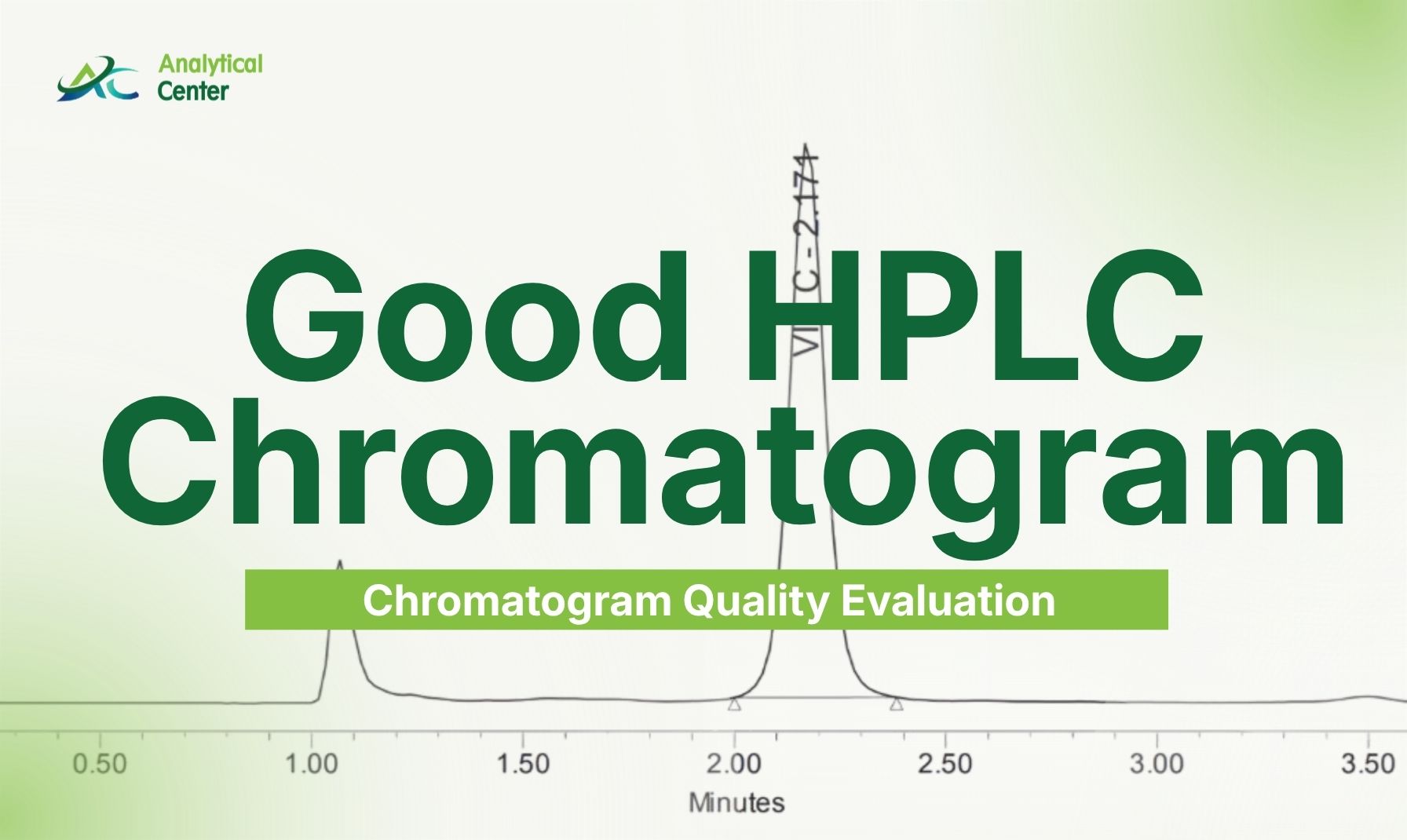
High-Performance Liquid Chromatography (HPLC) is one of the most widely used analytical techniques for the identification and quantification of compounds in pharmaceutical, food, environmental, and chemical laboratories. While a chromatogram may appear visually acceptable, not every chromatographic result indicates that the analytical system is performing optimally.
Before analytical results can be accepted, laboratories must evaluate chromatogram quality to ensure that the chromatographic system is capable of producing accurate, precise, and reliable data. This evaluation is commonly performed as part of the System Suitability Test (SST) prior to sample analysis.
Several chromatographic parameters are routinely assessed to verify system performance. Among these, Peak Shape, Resolution, Tailing Factor, and Theoretical Plates are considered the most critical indicators of chromatographic quality.
Peak Shape
Peak shape is one of the first indicators of chromatographic performance. An ideal chromatographic peak should be symmetrical, narrow, and closely resemble a Gaussian distribution.
Well-shaped peaks indicate that analytes have migrated efficiently through the chromatographic column without significant interference. Conversely, distorted peaks may suggest problems related to column condition, mobile phase composition, sample preparation, or injection technique.
Common peak abnormalities include:
• Peak tailing
• Peak fronting
• Split or double peaks
Maintaining symmetrical peak shapes is essential for accurate peak integration and quantitative analysis.
Resolution (Rs)
Resolution measures the degree of separation between two adjacent chromatographic peaks. It is one of the most important parameters for determining whether individual compounds can be accurately identified and quantified.
Higher resolution values indicate better separation between analytes, reducing the possibility of peak overlap and improving analytical reliability.
For many HPLC applications, a Resolution (Rs) value of 2.0 or greater is generally considered adequate to achieve complete separation between neighboring peaks.
Good resolution contributes directly to accurate identification and quantification of target compounds.
Tailing Factor (TF)
The Tailing Factor evaluates the symmetry of a chromatographic peak.
Ideally, peaks should exhibit minimal tailing to ensure accurate integration and reproducible quantitative results. Excessive peak tailing may indicate interactions between analytes and the stationary phase, deterioration of the chromatographic column, inappropriate mobile phase conditions, or other system-related issues.
In many validated analytical methods, a Tailing Factor of 2.0 or less is considered acceptable during system suitability testing.
Monitoring peak symmetry helps laboratories identify potential chromatographic problems before sample analysis.
Theoretical Plates (N)
Theoretical Plates (N) represent the efficiency of the chromatographic column.
Higher theoretical plate numbers indicate greater column efficiency, resulting in sharper peaks and improved chromatographic separation. Lower values may suggest declining column performance due to contamination, aging, or inappropriate operating conditions.
For many HPLC methods, a minimum value of 2,000 theoretical plates is commonly used as one of the acceptance criteria during System Suitability Testing.
Maintaining high column efficiency is essential for achieving consistent and reliable chromatographic performance.
Why These Parameters Matter
Evaluating chromatographic quality before routine analysis ensures that the HPLC system is operating within acceptable performance limits.
Assessing Peak Shape, Resolution, Tailing Factor, and Theoretical Plates helps laboratories:
• Verify instrument performance before sample analysis.
• Ensure accurate and reproducible analytical results.
• Detect chromatographic problems at an early stage.
• Support compliance with pharmacopeial and regulatory requirements.
• Improve confidence in analytical data.
These parameters form an essential part of System Suitability Testing (SST) and provide assurance that the chromatographic system is capable of generating reliable analytical results.
Our Laboratory Capability
Our laboratory performs HPLC analysis using validated or verified analytical methods supported by comprehensive System Suitability Testing (SST). Each analytical sequence is evaluated against established chromatographic acceptance criteria to ensure optimal instrument performance before sample analysis.
By continuously monitoring critical chromatographic parameters, we deliver analytical results that are accurate, reliable, and compliant with recognized quality standards.
Reliable HPLC Results Begin with a Quality Chromatogram
A chromatogram is more than a graphical output—it is evidence of how well the chromatographic system is performing. Consistently evaluating Peak Shape, Resolution, Tailing Factor, and Theoretical Plates allows laboratories to maintain instrument performance, improve analytical reliability, and ensure confidence in every reported result.