
Why Environmental Monitoring is Critical in Food Production
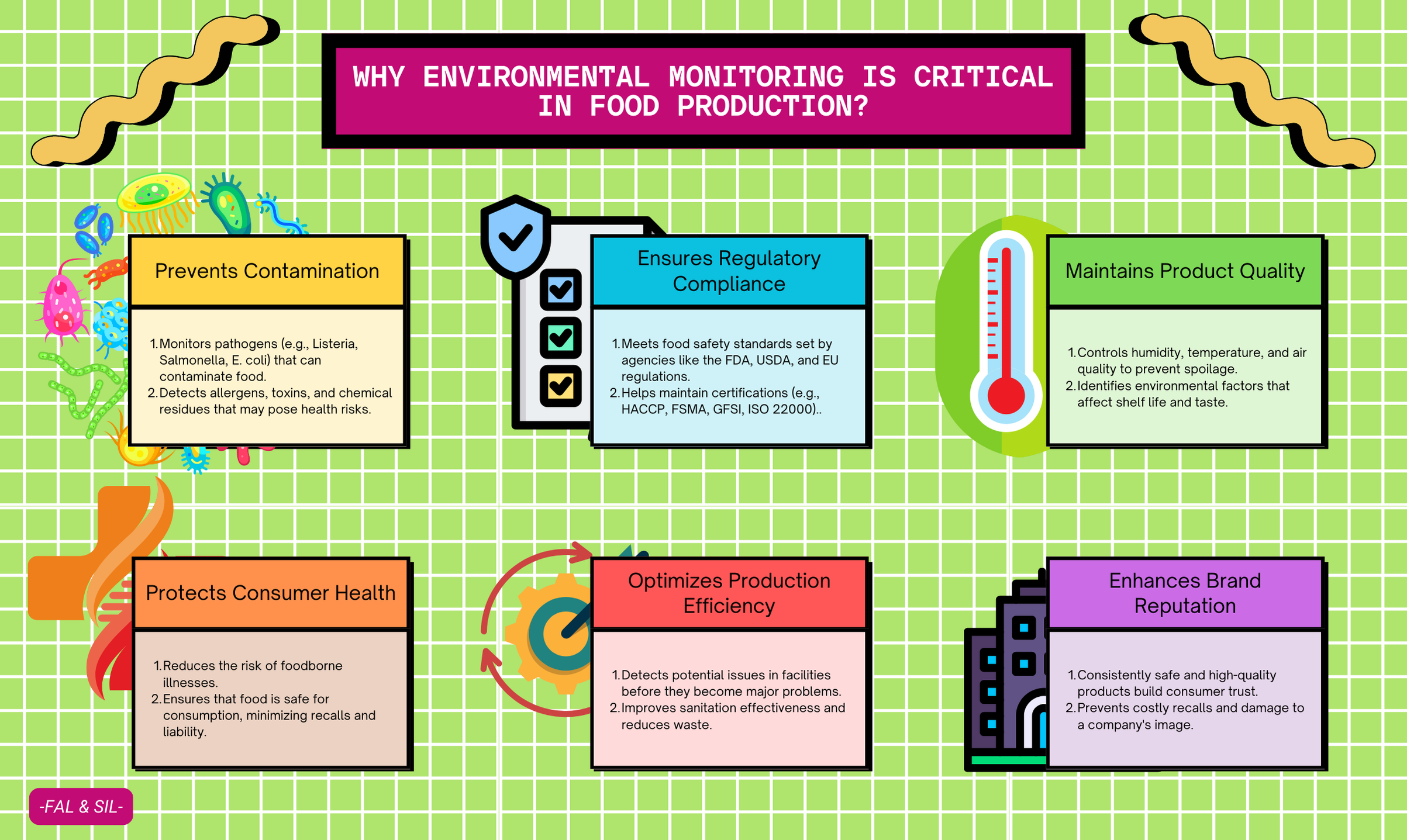
Environmental monitoring plays a crucial
role in food production, ensuring that the food we consume is safe,
high-quality, and free from harmful contaminants. In food processing
facilities, invisible threats such as bacteria, allergens, and chemical
residues can pose serious risks to consumer health. By closely monitoring the
environment, food producers can detect and prevent contamination before it
becomes a major issue.
Beyond safety, environmental monitoring
helps maintain compliance with strict regulatory standards set by organizations
like the FDA, USDA, and global food safety programs. Adhering to these
standards is not just about avoiding legal consequences—it’s about upholding
the trust of consumers and ensuring that every product meets the highest
quality standards.
Environmental factors like temperature,
humidity, and air quality can significantly impact food preservation. By
keeping these elements under control, food manufacturers can extend shelf life,
prevent spoilage, and optimize production efficiency. Monitoring also plays a
key role in sanitation, helping facilities identify areas where cleaning
efforts need to be improved to eliminate potential hazards.
Ultimately, a strong environmental
monitoring program protects both consumers and businesses. It reduces the risk
of foodborne illnesses, prevents costly recalls, and strengthens a brand’s
reputation. In an industry where trust is everything, ensuring that every step
of production happens in a clean and controlled environment is not just a best
practice—it’s a necessity.